
Debt as Household Power
Memoirs of a GeishaThis thread traces how the okiya’s debt system turns Chiyo’s training, mistakes, and later success into financial leverage that shapes who controls her future.
increasing Bearing strength in each event
 decreasing
Bearing strength in each eventdecreasingThe Price of a Child

The Price of a Child
A life entered in the accounts
Mother of Nitta Okiya accepts Chiyo as an investment, and Chiyo initially has no understanding that the costs of acquiring her will become her own debt. Her meals, lessons, medical care, and clothing are treated as expenses to be repaid through future geisha earnings.
Dependence made measurable
The arrangement gives the household financial control over Chiyo’s prospects. If she succeeds, her labor can generate income; if she disobeys, runs away, or fails to train, the same accounts can be used to justify withholding the very education that might let her pay her way out.
Debt as a Weapon

Debt as a Weapon
Charges accumulate
The ruined kimono, the brooch accusation, and Chiyo’s medical treatment are entered as burdens she may never repay. Her attempted escape also damages Mother of Nitta Okiya’s confidence in her, so training is stopped and Chiyo is kept as a maid rather than advanced toward a paying career.
The trap tightens
Auntie explains that debt is not a simple bill but a mechanism that governs Chiyo’s future choices. Running away can make the household unwilling to invest further; staying without training leaves her unable to earn the money needed to clear what she owes.
A Conditional Investment
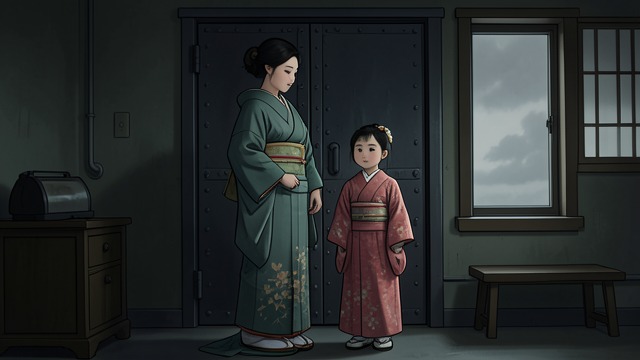
A Conditional Investment
Mameha reopens the account
Mameha persuades Mother of Nitta Okiya to reconsider Chiyo’s training by proposing to act as her older sister. Mother hesitates over the expense, while Mameha argues that a successful apprentice could repay her debts and generate income for the household.
A risky bargain
Their agreement ties Mameha’s compensation to whether Chiyo can repay her debt before turning twenty. Mother accepts a wager structured to limit her immediate risk, while Mameha takes on the challenge of rebuilding Chiyo’s career despite the years lost and Hatsumomo’s interference.
The Price of Mizuage
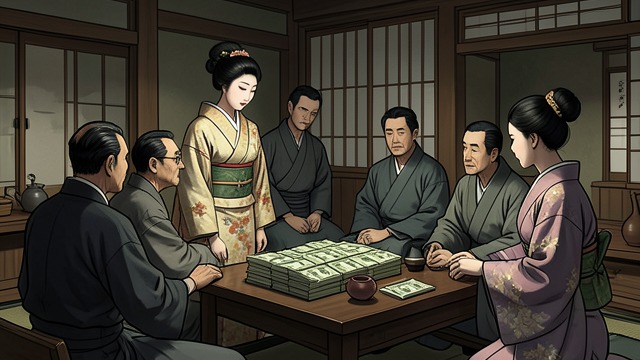
The Price of Mizuage
A career turned into a bid
Mameha engineers competition for Sayuri’s mizuage, while Mother of Nitta Okiya watches the potential earnings with a proprietor’s attention. Dr. Crab ultimately pays a record sum, although the bidding involves the Baron as well as Nobu, and the outcome is determined by rival patrons and the teahouse’s negotiations.
Adoption and ownership
Mother adopts Sayuri after the transaction, and the adoption absorbs the debt into the household while also assigning her earnings to the okiya. The apparent reward for Sayuri’s success therefore strengthens Mother’s control: the debt disappears, but Sayuri does not gain independent command of the proceeds.
The Account Settled
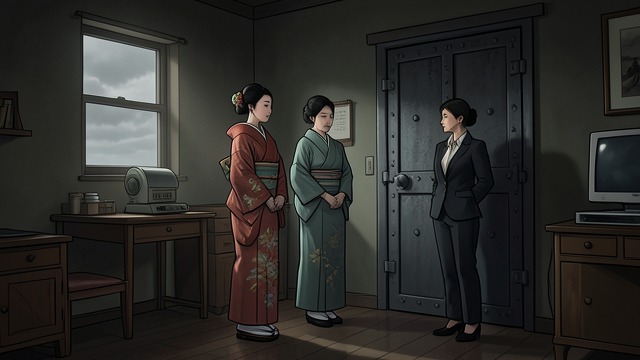
The Account Settled
A dispute over the promise
Mameha returns with Mrs. Okada to settle the wager over Sayuri’s earnings. Mother disputes the terms and tries to offer less than the agreed amount, using her authority as the household’s owner to challenge Mameha’s claim.
Sayuri becomes the witness
Mameha asks Sayuri to state what she remembers, and Sayuri confirms that Mother promised double earnings if the debt was repaid. By choosing honesty over the comfort of silence, Sayuri helps enforce the agreement and shows that her success can give her some leverage within a system that still owns her income.
When Chiyo arrives at the okiya
After Hatsumomo’s kimono scheme and Chiyo’s failed escape
More than two years after Chiyo stops training
When Sayuri is fifteen
When Sayuri is eighteen, after she turns her collar
